
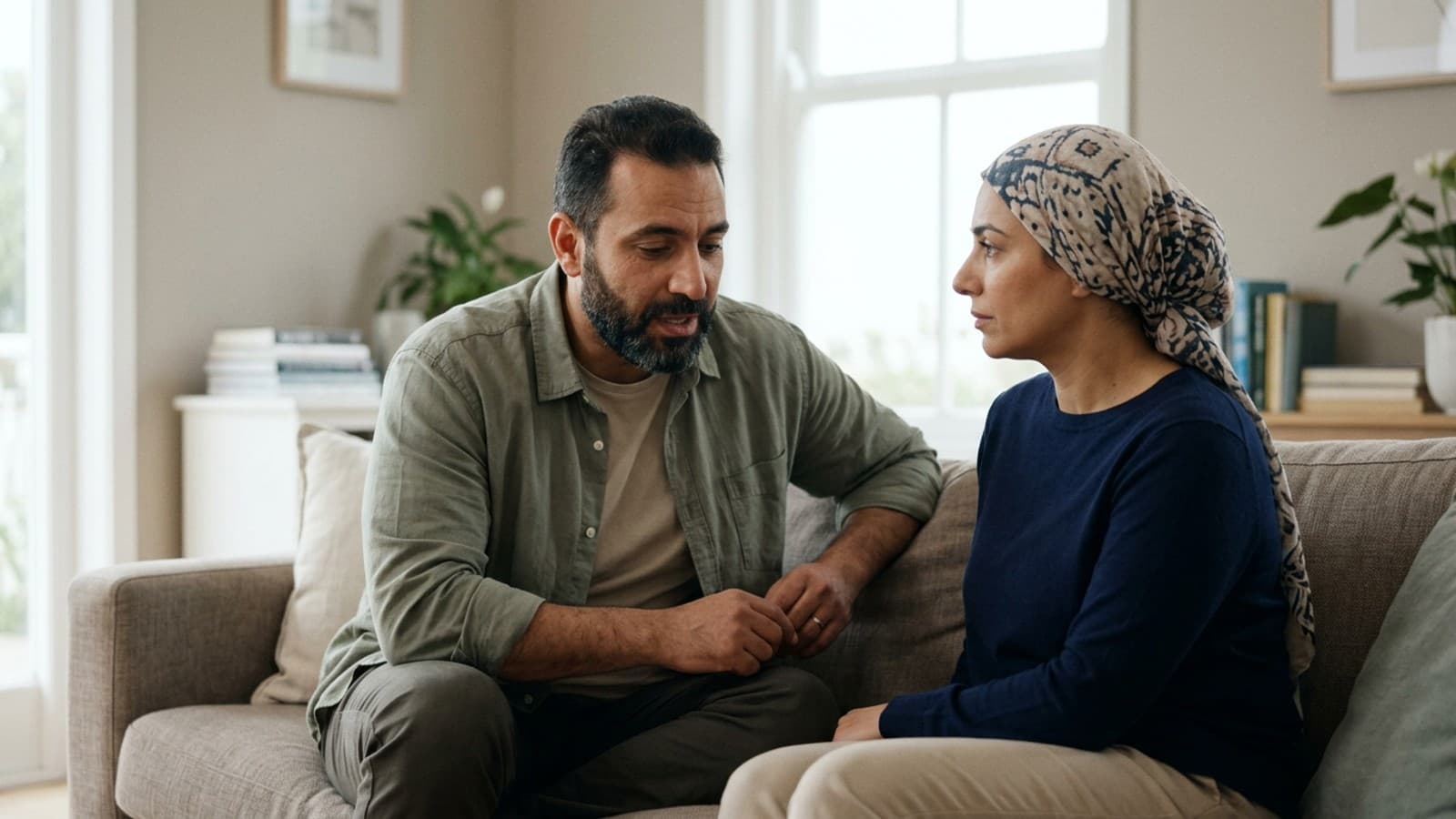
A randomized control trial involving 84 couples found that the Gottman Method's Trust Revival approach produced significant improvements in relationship functioning after infidelity, validating it as an effective intervention for couples attempting to repair their relationship following betrayal (Irvine & Peluso, 2022). For couples facing the devastation of an affair, this research offers something many desperately need: evidence that structured, professional guidance can help transform the trauma of betrayal into genuine healing.
The Trust Revival Method isn't a quick fix or a guarantee—affair recovery remains one of the most painful journeys a couple can walk. But it provides a clear, research-backed roadmap through three distinct phases: Atonement, Attunement, and Attachment. Developed by Drs. John and Julie Gottman based on breakthrough research and decades of clinical experience, this approach recognizes that infidelity creates a unique type of relational trauma requiring specialized care, not just general couples therapy.
Many couples attempting to recover from an affair find themselves stuck in painful loops: the same questions asked repeatedly, trust seemingly rebuilt only to collapse again, or conversations that erupt into blame and defensiveness instead of healing. The Trust Revival Method breaks this cycle by structuring the work into sequential phases, each addressing specific needs that must be met before moving forward.
What Is the Gottman Trust Revival Method?
The Trust Revival Method is a three-phase framework specifically designed to address the trauma of infidelity and guide couples through the complex process of rebuilding trust. Unlike general couples therapy, which addresses communication patterns and relationship satisfaction broadly, this approach recognizes that betrayal requires trauma-informed care, complete accountability, and phased healing.
Dr. John Gottman defines the core principle of the second phase as "the desire and the ability to understand and respect your partner's inner world" (Gottman Institute). But before couples can attune to each other's needs, before they can rebuild intimacy or envision a shared future, the partner who had the affair must take complete responsibility and the betrayed partner must feel safe enough to begin processing the trauma.
The method emerged from Dr. Gottman's nearly four decades of research on couple interactions at the renowned "Love Lab" at the University of Washington, where thousands of couples have been studied to identify what makes relationships succeed or fail after crisis. The Trust Revival Method translates that research into a structured clinical approach that therapists trained in the Gottman Method use to guide couples through each phase at a pace that honors both partners' emotional readiness.
What Happens in the Atonement Phase?
The first phase focuses entirely on accountability, transparency, and acknowledging the depth of harm caused. Atonement requires the partner who had the affair to accept full responsibility without defensiveness, justification, or blame-shifting—a requirement that sounds straightforward but proves emotionally demanding in practice.
The betrayed partner typically needs to know the full story. They may have many questions: where, when, how long, with whom, what was said, what was shared about the marriage. These questions deserve truthful answers. Withholding information or offering selective disclosure—revealing only what you think your partner can handle—prolongs the pain and prevents healing from beginning. As the Gottman Institute notes, reluctance to offer complete transparency "may be a signal that the hurtful impact of the affair is still not understood."
In practical terms, atonement often includes:
Complete disclosure. The unfaithful partner answers questions honestly, even when the answers are painful to give and hear. The goal isn't to retraumatize with graphic details, but to provide enough truth that the betrayed partner can begin to make sense of what happened.
Demonstrated transparency. This might mean sharing phone locations, message histories, email access, credit card records, and daily schedules. What were previously private spaces become open. For many people, this feels invasive or controlling—but it's not about punishment. It's about rebuilding safety through verifiable honesty.
Genuine remorse. Words matter, but as research on infidelity recovery consistently shows, "'sorry' alone doesn't fix it" (Mitchell et al., 2025). Behavior change must accompany verbal apologies. The unfaithful partner must demonstrate understanding of the pain they caused through sustained, visible changes in behavior.
Patience with the betrayed partner's timeline. The person who was betrayed will need to process intense emotions—rage, grief, fear, disbelief—that may surface unpredictably for months. The unfaithful partner must absorb this emotional storm without defensiveness or requests to "move on."
This phase is exhausting. It can last many months. The betrayed partner may feel consumed by intrusive thoughts about the affair. The unfaithful partner may feel trapped in a cycle of shame and repeated apologies that never seem sufficient. Both experiences are normal parts of the atonement process. Without genuine atonement, trust cannot begin to rebuild—this foundation is non-negotiable.
How Does Attunement Rebuild the Emotional Connection?
Once accountability is established and the betrayed partner feels that the full truth has been told, the work shifts to understanding what created vulnerability in the relationship. It's critical to note: these underlying issues never justify the affair itself. The choice to betray remains the sole responsibility of the person who made it. But understanding what was missing—emotional connection, unmet needs, communication breakdown, external stressors—helps both partners see what must change to build something more resilient.
Attunement, as Dr. Gottman defines it, is "the desire and the ability to understand and respect your partner's inner world." In this phase, couples learn to turn toward each other again. They practice expressing needs without blame, listening with empathy instead of defensiveness, and rebuilding the friendship that may have eroded over time.
Practical strategies in the attunement phase include:
Daily emotional check-ins. Simple questions like "How was your day?" or "What's on your mind?" create opportunities for connection. The goal isn't problem-solving—it's emotional presence and understanding.
"I feel" language instead of accusation. Replacing "you never…" with "I feel scared when…" reduces defensiveness and opens space for vulnerability.
Practicing vulnerability. Both partners share insecurities, fears, and hopes. For many people, especially those raised to hide emotional needs, this proves challenging—but it's essential for rebuilding intimacy.
Going public with the commitment to reconcile. Couples alert close friends and family that they are working to rebuild the relationship. This step makes the renewed commitment real and creates a support network that can sustain the couple through difficult moments.
The attunement phase also addresses the trauma responses the betrayed partner may still be experiencing. Research by Dr. Shirley Glass, often cited in Gottman training, found that betrayed partners experience symptoms similar to PTSD—intrusive thoughts, hypervigilance, emotional flooding. Therapists trained in the Trust Revival Method structure conversations about the affair carefully to prevent retraumatization while still allowing necessary processing.
Importantly, attunement isn't about returning to the old relationship. It's about understanding each other more deeply than before and building new patterns of connection that protect against future distance.
What Does the Attachment Phase Restore?
The final phase focuses on rebuilding both emotional and physical intimacy. After working through the crisis of discovery and rebuilding emotional attunement, couples in the attachment phase are ready to reconnect on a deeper level—including restoring sexual intimacy at a pace that respects both partners' readiness.
Physical intimacy after infidelity is complex. The betrayed partner may experience intrusive thoughts during sex, difficulty trusting their own body's responses, or fear that their partner is comparing them to the affair partner. The unfaithful partner may struggle with guilt or uncertainty about how to initiate connection. As Dr. Gottman notes, without physical intimacy that is pleasurable to both partners, the relationship cannot fully begin again—but this reconnection must unfold naturally as emotional safety is reestablished, not be rushed.
The attachment phase involves:
Open communication about sexual needs and preferences. Couples discuss what feels good, what creates connection, and what boundaries feel important. This ongoing conversation—not a one-time talk—helps both partners feel seen and valued.
Creating new shared meanings and rituals. The goal is to build a new relationship, not resurrect the old one. Couples develop habits that support long-term relationship health: weekly date nights, morning coffee together, shared goals, values alignment.
Setting boundaries that protect the marriage. This might include agreements about transparency with technology, social situations that feel risky, or how to handle contact from the affair partner if necessary.
Reaching a place of peace with uncertainty. By this phase, many betrayed partners reach a point where, as the Gottman Institute describes, they can finally say: "I've asked all I need to ask. I'm okay with not knowing." This doesn't mean they've forgotten or that the pain is erased. It means they've healed enough to stop being consumed by the details of the betrayal and can instead focus on the future they're building together.
How Long Does Recovery Through the Trust Revival Method Take?
There is no universal timeline. The Irvine and Peluso study involved a structured intervention with follow-up at 6 months, but that measures the treatment period—not the full emotional arc of healing. Research examining injured partners' decision-making found that participants' infidelity discoveries ranged from 2 to 18 years prior, with an average of 6 years, suggesting that recovery is an ongoing process rather than a fixed endpoint (Mitchell et al., 2025).
Some couples move through the Trust Revival phases in months; others take years. What matters more than speed is genuine progress: consistent accountability, growing trust, improved communication, and deepening connection. Setbacks are normal. A difficult anniversary, an unexpected reminder, or external stress can temporarily derail progress. Healing is rarely linear.
Working with a therapist trained in the Gottman Method helps couples navigate these inevitable difficult moments and stay on course when progress feels stalled. If you're considering affair recovery counseling, understanding what to expect from a structured approach can help you assess whether it's the right fit for your situation.
What If Both Partners Aren't Fully Committed?
The Trust Revival Method requires genuine commitment from both partners. If the partner who had the affair is unwilling to take full accountability, offer transparency, or engage in the hard work of repair, healing cannot happen. Similarly, if the betrayed partner cannot move beyond punishment or remains unwilling to work toward forgiveness over time, reconciliation becomes unlikely.
Discernment counseling—a short-term approach designed to help couples gain clarity about whether to work on the relationship or move toward separation—can be helpful when partners are unsure about their commitment. This type of counseling, which typically lasts no more than five sessions, creates space to explore options without pressure to decide immediately. One partner may be leaning out while the other is leaning in; discernment counseling helps both partners understand their choices and the likely consequences.
But for couples who are both willing to commit, even when the commitment feels fragile at first, the Trust Revival Method offers a proven structure that has helped many couples move from betrayal to genuine healing. The research validates what many therapists have observed clinically: with the right guidance, transformation is possible.
When Should Couples Seek Help Using This Method?
The sooner, the better. Waiting months or years while attempting to navigate affair recovery alone often leads to entrenched patterns of resentment, repeated arguments that go nowhere, or emotional withdrawal that deepens over time.
Couples therapy is especially critical after infidelity because the emotions involved—rage, shame, fear, guilt—are so intense that productive conversations become nearly impossible without professional guidance. A therapist creates the safe space needed for these conversations and provides structure that prevents retraumatization while moving the work forward.
Reach out for help if:
- You've recently discovered an affair and don't know where to start
- You're months into trying to rebuild but feel stuck in the same painful conversations
- The betrayed partner continues to experience intrusive thoughts or emotional flooding
- The unfaithful partner feels defensive or unsure how to demonstrate accountability
- Either partner is unsure whether the relationship can survive this
Seeking professional help isn't a sign of failure. It's a sign that you're taking the healing process seriously and giving your relationship the best chance to recover.
The journey from betrayal to healing is one of the most painful paths a couple can walk. But the research is clear: structured approaches like the Gottman Trust Revival Method, delivered by trained therapists, can help couples not only survive infidelity but build relationships that are stronger, more honest, and more deeply connected than what existed before. Recovery isn't guaranteed—it requires hard work, genuine commitment, and patience with the non-linear nature of healing. But for couples willing to do that work, transformation is possible.
If you and your partner are navigating the aftermath of infidelity and need support, the therapists at Marriage Healing Center in Gainesville and Alexandria, Virginia, are trained in the Gottman Method and specialize in helping couples rebuild trust after betrayal. We offer in-person couples therapy in Northern Virginia and online e-therapy for Virginia residents. Led by Dr. Beverley Boothe, Ph.D., MSW, LCSW, our team understands the complex, phased work of affair recovery and can guide you through each stage of the Trust Revival Method. Reach out to schedule a consultation—recovery is possible, and you don't have to navigate this alone.
References
Gottman Institute. (n.d.). Reviving trust after an affair (part 2). Retrieved from https://www.gottman.com/blog/reviving-trust-after-an-affair/
Irvine, T. J., & Peluso, P. R. (2022). Validating the effectiveness of a Gottman Method couples therapy intervention, the Trust Revival Method, for affair recovery: A randomized control trial [Master's thesis, Florida Atlantic University]. https://scholars.nova.edu/en/publications/validating-the-effectiveness-of-a-gottman-method-couples-therapy-/
Mitchell, E. A., Brown, K. S., Spencer, J., & Harris, K. (2025). Staying together after infidelity: An exploration of the decision-making process of recovery from the perspective of the injured partner. Journal of Marital and Family Therapy, 52(1), e70110. https://pmc.ncbi.nlm.nih.gov/articles/PMC12745057/