
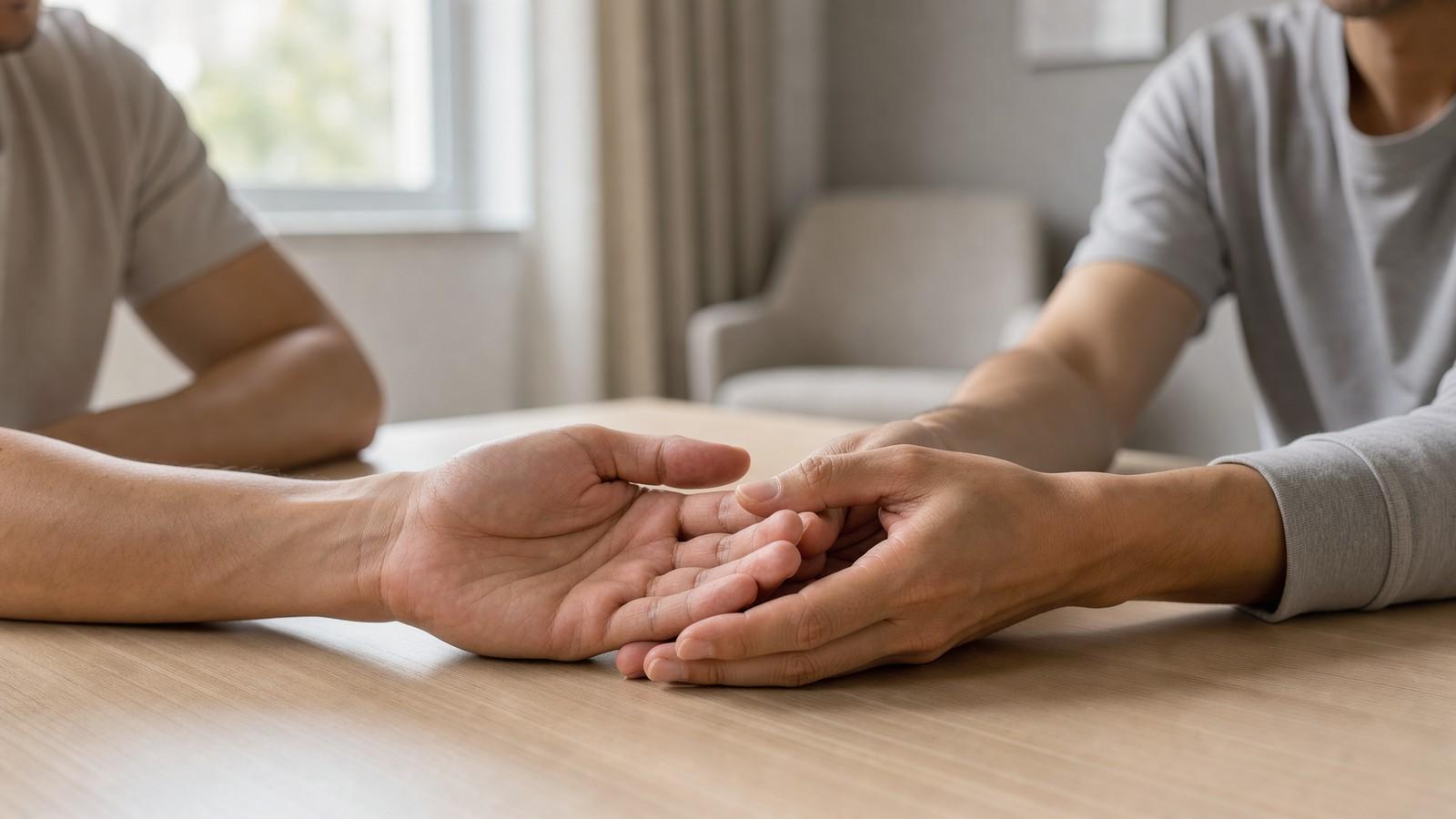
Couples therapy fails when the conditions necessary for healing aren't present. Sometimes the therapist lacks specialized training in relational work. Sometimes the approach doesn't match what the couple actually needs. Sometimes one or both partners aren't truly willing to change, or the relationship has deteriorated past the point where joint therapy is appropriate. And sometimes couples wait so long to seek help that years of destructive patterns have calcified into something far harder to repair.
The research is clear that couples therapy works for the majority who try it. A comprehensive review published in the Journal of Marital and Family Therapy found that couple therapy positively impacts about 70% of couples who receive treatment (Lebow et al., 2012). But that also means 30% of couples don't experience meaningful improvement. Understanding why therapy fails for some couples can help you avoid those pitfalls and find the support that will actually help your relationship heal.
Why Do Some Couples Leave Therapy Disappointed?
When couples therapy doesn't work, it's rarely because "therapy doesn't work for us." More often, one or more critical elements were missing from the start, and without them, even the most well-intentioned therapeutic work can't produce lasting change.
Some couples enter therapy expecting the therapist to fix their relationship without having to do uncomfortable work themselves. They want a referee who will confirm that their partner is the problem, not a guide who will ask both people to examine their contributions to the dynamic. When the therapist doesn't take sides or asks each partner to look at their own behavior, these couples become frustrated and leave, convinced therapy failed when what actually failed was their willingness to engage with the process.
Other couples attend therapy but one or both partners remain emotionally unavailable. They show up physically but won't share what they're really thinking or feeling, won't make themselves vulnerable, and won't take risks to repair what's broken. Therapy can't reach past walls people actively maintain.
For some couples, the timing is wrong. If one partner has already decided to leave and is only attending therapy to say they tried everything, the other partner's efforts won't be enough. Traditional couples therapy requires both people to be working toward the same goal: improving the relationship. When agendas are fundamentally misaligned, the work stalls.
And for many couples, therapy fails simply because they waited too long. Research from The Gottman Institute indicates that couples wait an average of six years of being unhappy before seeking help. By that time, contempt has often replaced affection, withdrawal has replaced engagement, and the reservoir of goodwill needed to sustain difficult repair work has run dry.
What Role Does Therapist Training Play in Success?
One of the most significant reasons couples therapy fails has nothing to do with the couple themselves: their therapist isn't adequately trained in relational work.
Most mental health training programs provide minimal preparation in couples therapy. Outside of specialized marriage and family therapy programs, exposure is typically limited to elective coursework or brief supervised experience. In the United States, a therapist can be fully licensed, see couples, bill for the work, and call themselves a couples therapist without a single hour of specialized couples training. There is no specific couples therapy license in most states and no requirement that a therapist have specialized training in relational dynamics, attachment theory, or the neuroscience of what happens when a couple's bond is under threat.
The result is that many therapists practicing couples therapy today never took a formal course in it and never completed internships under supervision from someone who had mastered the work. As psychotherapy researcher William Doherty noted in a Psychotherapy Networker article on bad couples therapy, therapists without specialized training can inadvertently recreate the couple's destructive patterns right in the therapy room, allowing sessions to devolve into unproductive fights without the structure or intervention needed to redirect them.
Couples therapy requires specific skills that individual therapy training doesn't teach: how to track two people's emotional states simultaneously, how to interrupt destructive cycles without taking sides, how to create safety for vulnerable conversations when both partners are activated, and how to teach relational skills that most people never learned growing up. Without that training, even caring, competent therapists can struggle to help couples make lasting progress.
How Does the Therapy Approach Affect Outcomes?
Not all couples therapy is created equal. The approach your therapist uses matters significantly in determining whether the work will help.
Generic "talk therapy" applied to couples often falls short because it doesn't address the specific dynamics that keep relationships stuck. Couples don't just need a space to air grievances. They need structured interventions grounded in what research actually shows helps relationships heal.
The field of couples therapy has converged on several evidence-based approaches with decades of research demonstrating their effectiveness. Emotionally Focused Therapy (EFT), developed by Dr. Sue Johnson, focuses on attachment bonds and emotional connection. Research published in Family Process found that EFT produces recovery rates of 70 to 75% among couples presenting with significant relationship distress, with approximately 90% showing measurable improvement by the end of treatment (Wiebe & Johnson, 2016).
The Gottman Method, developed from Dr. John Gottman's four decades of research on what predicts relationship success and failure, teaches couples concrete skills for managing conflict, deepening friendship and intimacy, and creating shared meaning. The Gottman Institute reports improvement in relationship satisfaction for approximately 75% of couples who complete Gottman Method Couples Therapy. A 2024 pilot study found Gottman Method couples therapy more effective than treatment-as-usual approaches specifically for couples recovering from infidelity, with significant improvements in trust, conflict management, relationship satisfaction, and quality of intimacy (Irvine et al., 2024).
Integrative Behavioral Couple Therapy (IBCT) helps couples accept each other's differences while also working on change. Research shows it produces similar or better outcomes than traditional behavioral approaches while being more acceptable to couples because it balances acceptance with change efforts.
When a therapist uses an evidence-based approach, they're following protocols proven to work rather than improvising based on intuition. That structure makes a measurable difference in outcomes.
When Is the Timing Wrong for Therapy to Work?
Even with the right therapist using the right approach, some situations aren't appropriate for traditional couples therapy. Recognizing when that's the case can save you months of frustration and help you find the support you actually need.
When abuse is present. Couples therapy is not appropriate when there is ongoing physical, emotional, or psychological abuse in the relationship. Abuse isn't a communication problem or a conflict management issue. It's a pattern of power and control that requires individual intervention for the person causing harm, not joint therapy that can actually escalate danger by creating opportunities for the abusive partner to manipulate the therapist or retaliate after sessions.
When one partner has decided to leave. If one person has emotionally exited the relationship and is only attending therapy to say they tried everything before filing for divorce, traditional couples therapy won't work. These "mixed-agenda couples," where one partner is leaning out and the other is leaning in, need a different approach. Discernment counseling, a short-term process designed specifically for this dynamic, helps couples gain clarity about whether to commit to repair, move toward separation, or take more time to decide.
When individual issues need attention first. If one or both partners are struggling with active addiction, untreated mental health crises, or other individual issues that overwhelm their capacity to engage in relational work, those issues often need stabilization through individual therapy before couples work can be effective. You can't work on communication patterns when one person is in the midst of a severe depressive episode or active substance use.
Timing matters. Seeking help at the first signs of persistent trouble rather than waiting until contempt has set in dramatically increases the likelihood that therapy will work.
What Makes Couples Therapy More Likely to Succeed?
Understanding what helps therapy work can guide you toward the support most likely to help your relationship.
Both partners are willing to participate. You don't have to be equally enthusiastic about therapy, and you don't need to agree on what the problems are. But both people need to be willing to show up, engage honestly, and consider making changes in how they show up in the relationship. When one partner refuses to participate or actively works to undermine the process, therapy can't succeed.
You choose a therapist with specialized training. Look for therapists who have specific training and certification in couples therapy approaches like the Gottman Method, Emotionally Focused Therapy, or Integrative Behavioral Couple Therapy. Ask potential therapists directly about their training in relational work. How many couples do they work with regularly? What models do they practice? Have they completed certification programs in those approaches? A therapist who is transparent about their training and ongoing education is a good sign.
You seek help earlier rather than later. The couples who benefit most from therapy are those who reach out when they notice persistent patterns they can't resolve on their own, not those who wait until divorce feels inevitable. Early intervention gives you more goodwill to work with, fewer entrenched patterns to undo, and a better foundation for rebuilding connection.
You commit to the process. Therapy works when both partners do the work between sessions, not just during them. That means practicing the skills your therapist teaches, having the difficult conversations, and showing up differently in moments of conflict. Change doesn't happen in the therapy room alone. It happens when you apply what you're learning to your real life together.
How Do You Know If Your Therapy Isn't Working?
Sometimes couples stay in therapy that isn't helping because they're not sure what progress should look like or they feel guilty about "giving up" on the process.
If you've been in therapy for several months and you're not seeing any improvement in your ability to communicate, your conflicts are just as frequent and intense as when you started, you feel worse about your relationship than you did before, or sessions consistently devolve into unproductive arguments that your therapist doesn't redirect, it may be time to reassess.
Good therapy should produce noticeable changes within the first few months. You might not be fully healed, but you should feel like you're learning new skills, understanding patterns you couldn't see before, or feeling more hopeful about the relationship's future. If none of those things are happening, the issue may be a poor therapist fit, an approach that doesn't match your needs, or timing that isn't right for couples work.
It's okay to seek a second opinion or find a different therapist. The right therapeutic relationship matters, and not every therapist is the right fit for every couple. If your current therapy isn't working, that doesn't mean therapy can't help. It may mean you need a different approach or a therapist with more specialized training in the dynamics you're facing.
What Should You Look For in a Couples Therapist?
When you're searching for a couples therapist, specific questions can help you find someone qualified to help.
Ask about their training. "What specific training do you have in couples therapy?" is a fair and important question. Look for therapists who have completed certification programs in evidence-based approaches like the Gottman Method, EFT, or IBCT, not just those who "work with couples" as part of a general practice.
Ask about their approach. "What model or approach do you use in couples therapy?" A therapist should be able to clearly articulate their theoretical orientation and how it guides their work with couples. If they can't describe a specific approach, that's a red flag.
Ask about their experience. "How many couples do you work with regularly, and what issues do you specialize in?" Therapists who primarily see individuals and occasionally see couples may not have the depth of experience you need. Look for therapists whose practice is substantially focused on relational work.
Ask about the structure. "How do you typically structure couples sessions?" A good couples therapist will explain how they manage conflict in the room, how they ensure both partners feel heard, and what the work will look like week to week. If they can't describe a clear structure, that may indicate they're improvising rather than following an evidence-based protocol.
Trust your gut about fit. Do you both feel respected and understood by this therapist? Can they hold space for both of your perspectives without taking sides? Do they interrupt unproductive patterns or let sessions spiral into arguments? The therapeutic relationship matters, and it's okay to seek a different therapist if the fit doesn't feel right.
What Happens Next?
Couples therapy works for most couples who find the right therapist, use an evidence-based approach, and commit to the process while there's still enough goodwill to rebuild from. But it fails when any of those elements are missing.
If you've been considering therapy or if past therapy didn't help, understanding these factors can guide you toward support that will actually make a difference. The right therapist with the right training at the right time can help most couples heal, even from significant distress.
At Marriage Healing Center, our therapists hold specialized training in multiple evidence-based approaches including the Gottman Method, Emotionally Focused Therapy, and Imago Relationship Therapy. We work with couples in Gainesville and Alexandria, as well as online throughout Virginia, offering evidence-based couples therapy for communication struggles, affair recovery, discernment counseling for mixed-agenda couples, and intensive therapy for couples in crisis. You can learn more or request a consultation at marriagehealingcenter.com/counseling-request.
References
Irvine, T. J., Peluso, P. R., Benson, K., Cole, C., Cole, D., Gottman, J. M., & Gottman, J. S. (2024). A pilot study examining the effectiveness of Gottman Method couples therapy over treatment-as-usual approaches for treating couples dealing with infidelity. The Family Journal, 32(1), 51–61. https://journals.sagepub.com/doi/10.1177/10664807231210123
Lebow, J. L., Chambers, A. L., Christensen, A., & Johnson, S. M. (2012). Research on the treatment of couple distress. Journal of Marital and Family Therapy, 38(1), 145–168. https://onlinelibrary.wiley.com/doi/abs/10.1111/j.1752-0606.2011.00249.x
Wiebe, S. A., & Johnson, S. M. (2016). A review of the research in emotionally focused therapy for couples. Family Process, 55(3), 390–407. https://pubmed.ncbi.nlm.nih.gov/27273169/