
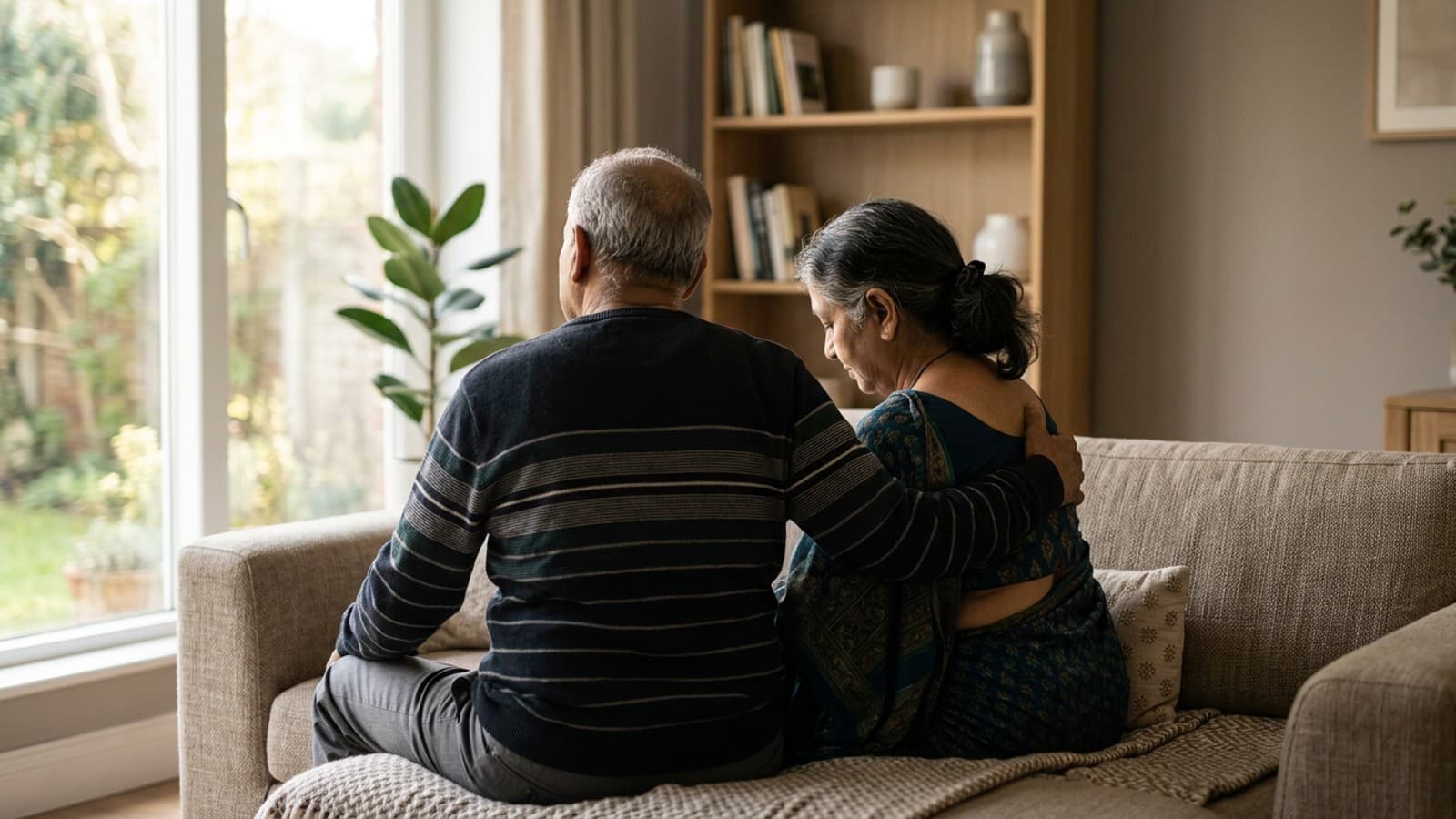
More than one-third of married older adults in the United States experience loneliness, according to research examining dyadic loneliness among couples (Stokes & Barooah, 2020). That means millions of people share a home, a life, and often decades of history with a partner—yet still feel profoundly alone. The experience is both common and deeply disorienting. You have someone beside you every day, yet the emotional closeness you once felt, or hoped to build, seems unreachable. You're not failing at marriage. You're experiencing emotional isolation, and it's one of the most painful challenges couples face.
Loneliness in marriage doesn't mean you're with the wrong person or that your relationship is over. It means something fundamental has shifted in how you and your partner connect emotionally. Understanding why that loneliness exists—what causes it, how it differs from simply being disconnected, and what you can do about it—is the first step toward feeling less alone.
What Does Loneliness in Marriage Actually Feel Like?
Loneliness in marriage is distinct from simply spending time apart or having different interests. It's the emotional experience of feeling unseen, unknown, or emotionally unsupported by the person you're closest to. You might be sitting together on the couch, going through daily routines, or even having conversations—yet feel an aching sense of isolation.
Common experiences include:
- Feeling like your partner doesn't truly know you anymore—your worries, hopes, or inner world
- Hesitating to share vulnerable feelings because you doubt they'll be met with care
- Experiencing important moments—good or bad—and wishing you could share them with someone who understands, even though your partner is right there
- Feeling emotionally invisible, as if your presence doesn't register deeply with your partner
- Going through difficult times and realizing you're coping alone, not together
- Sensing that you're living parallel lives rather than building one shared life
Research on marital strain over time found that couples experiencing persistent conflict were more likely to feel lonely, even decades into their marriages (O'Neal & Wickrama, 2020). As lead researcher Catherine Walker O'Neal noted, "Just having a person in your life does not mean that you aren't lonely." The physical presence of a spouse doesn't guarantee emotional connection.
Why Does Loneliness Happen in Marriage?
Loneliness in marriage doesn't usually result from one dramatic event. It builds gradually through patterns that erode emotional intimacy and create distance where closeness once existed.
How Do Communication Patterns Create Loneliness?
When conversations narrow to logistics—schedules, bills, who's picking up the kids—emotional intimacy suffers. You're coordinating lives efficiently, but you're not sharing your inner worlds. Over time, this transactional communication teaches both partners that deeper sharing isn't welcome or necessary.
Research examining marital strain trajectories over 25 years found that couple-level patterns of ongoing strain predicted later-life loneliness for both partners (Wickrama et al., 2020). When partners stop communicating about their emotional experiences—fears, hopes, disappointments—they gradually become strangers who happen to share a home.
What Role Does Emotional Availability Play?
According to research from The Gottman Institute, both partners in a relationship are emotionally available only 9% of the time, leaving 91% of interactions vulnerable to miscommunication and missed connection. When those brief windows of mutual availability don't align, or when partners don't recognize and respond to each other's bids for connection, loneliness deepens.
You might reach out—sharing something that happened at work, expressing worry about a family member, or simply seeking reassurance—and receive a distracted "Mm-hmm" in response. Those small rejections accumulate. Eventually, you stop reaching out at all.
Why Do Unmet Emotional Needs Lead to Isolation?
Every person has emotional needs: to be seen, heard, valued, comforted, celebrated. When those needs go unmet repeatedly in a marriage, loneliness follows. Your partner may not realize what you need, or may be overwhelmed by their own stressors and unable to respond. Either way, the experience of bringing your whole self to the relationship and feeling unseen creates profound isolation.
Research on loneliness within intimate relationships shows that when emotional support, validation, and responsiveness are absent, partners feel lonely even when physically together, and having a lonely spouse increases the likelihood of experiencing loneliness oneself (Stokes & Barooah, 2020). The marriage exists, but the emotional safety and connection it should provide doesn't.
Can Resentment and Unresolved Conflict Cause Loneliness?
Absolutely. When hurts go unaddressed, when conflicts repeat without resolution, or when one partner feels chronically misunderstood or dismissed, walls form. Partners may stop being vulnerable with each other to avoid further pain. They may withdraw emotionally as a form of self-protection.
The University of Georgia study tracking couples over nearly 20 years found that those who argued frequently early in their marriage were more likely to feel lonely decades later (O'Neal & Wickrama, 2020). The loneliness from unresolved conflict doesn't fade on its own. It compounds, creating emotional distance that feels impossible to bridge.
What Happens When Partners Have Different Emotional Needs?
Some people need frequent verbal reassurance and physical affection. Others feel loved through acts of service or quality time. When partners don't understand or respond to each other's specific emotional languages, both can end up feeling lonely—one person wishing their partner would talk more, the other wishing their partner would just do something to show they care.
These mismatches don't mean incompatibility. They mean that understanding and intentional effort are needed to bridge the gap between what each partner needs and what they're receiving.
How Is Loneliness Different from Feeling Disconnected?
Emotional disconnection and loneliness are related but distinct. Disconnection describes the relationship's state: you've drifted apart, communication has narrowed, intimacy has faded. Loneliness describes the emotional experience of that disconnection: the pain, the sense of isolation, the longing for closeness that isn't there.
You can feel disconnected without feeling deeply lonely if you're both aware of the distance and working to close it together. But loneliness in marriage often involves a sense of helplessness—feeling alone in noticing the distance, alone in wanting more, or alone in trying to fix it.
Research confirms this distinction. Studies show that loneliness within marriage is not simply about relationship quality but about whether each partner feels emotionally understood, valued, and supported (Wickrama et al., 2020). You can have a functionally "good" marriage—no major conflicts, shared responsibilities managed well—and still feel profoundly lonely if emotional intimacy is missing.
What Are the Long-Term Effects of Loneliness in Marriage?
Loneliness doesn't just hurt emotionally. It affects physical health, mental well-being, and the relationship's stability.
Research on marital conflict and loneliness found that partners who felt lonely also reported worse physical health compared to peers their age (O'Neal & Wickrama, 2020). Chronic loneliness elevates stress hormones, weakens immune function, and increases vulnerability to depression and anxiety.
Moreover, loneliness in one partner often spreads to the other. The same study found that when one spouse felt lonely, their partner typically did as well—a kind of emotional contagion where the isolation experienced by one person affects the entire relationship system.
Left unaddressed, loneliness erodes the foundation of a marriage. Partners may seek emotional connection elsewhere—through friendships, work relationships, or even affairs. They may simply coexist as roommates, losing the intimacy and partnership that marriage is meant to provide.
What Can You Do When You Feel Lonely in Your Marriage?
Feeling lonely in your marriage doesn't mean the relationship is beyond repair. It means emotional intimacy needs rebuilding, and that work begins with recognizing the loneliness and naming it—both to yourself and, when you're ready, to your partner.
Can Talking About Loneliness Help?
Yes, but it requires vulnerability. Saying "I feel lonely in our marriage" to your partner is hard. It risks defensiveness, dismissal, or misunderstanding. But loneliness thrives in silence. When you name it, you create an opportunity for change.
Try framing it as your experience, not an accusation: "I've been feeling really lonely lately, even though we're together. I miss feeling emotionally close to you. Can we talk about how we might reconnect?"
How your partner responds matters. If they're receptive, curious, and willing to explore what's changed, you have a foundation to rebuild from. If they're defensive or dismissive, that response itself is valuable information about whether professional support is needed.
How Do You Rebuild Emotional Connection?
Rebuilding connection requires both partners to show up differently. Small, consistent practices over time restore emotional safety and closeness:
Ask open-ended questions. Move beyond "How was your day?" to "What's been on your mind this week?" or "What's something you've been worried about that I might not know?" Genuine curiosity signals that your partner's inner world matters to you.
Turn toward bids for connection. When your partner shares something—a thought, a feeling, a small observation—acknowledge it. A simple "Tell me more" or "That sounds hard" goes a long way.
Create rituals of connection. Set aside time each day for distraction-free conversation. Even ten minutes of genuine presence can counteract hours of parallel living.
Express appreciation. Name what you value about your partner regularly. Loneliness often includes feeling unseen; appreciation directly counters that experience.
These practices are covered in depth in existing posts on how to stay emotionally connected in a relationship, but the core principle remains: emotional connection is rebuilt through repeated experiences of being seen, heard, and valued.
What If You've Tried and Nothing Has Changed?
If you've named your loneliness, initiated conversations, and tried to reconnect but nothing has shifted—or if your partner seems unwilling to engage—couples therapy provides the structure, tools, and perspective needed to address what's keeping you apart.
A therapist trained in approaches like the Gottman Method or Emotionally Focused Therapy (EFT) can help you identify destructive patterns, process unspoken resentments, and rebuild emotional intimacy in ways that self-directed efforts can't always achieve.
Seeking support isn't an admission of failure. It's a recognition that loneliness in marriage is a serious, painful issue that deserves skilled attention. You don't have to keep struggling alone.
When Is Professional Help Essential?
Some forms of loneliness in marriage signal that the relationship needs more than self-directed effort can provide:
- The loneliness has persisted for months or years despite attempts to reconnect
- Your partner seems unaware or indifferent to your emotional isolation
- Communication has become destructive—frequent conflict, defensiveness, or stonewalling
- You or your partner have emotionally withdrawn to the point where vulnerability feels impossible
- One or both of you are considering separation because the loneliness feels unbearable
These aren't signs that your marriage is over. They're signals that professional guidance would give you the best chance of rebuilding the connection you both want.
Research consistently shows that couples therapy is effective when delivered by trained professionals. The earlier you seek support, the more successful the intervention tends to be. Waiting until loneliness has calcified into contempt or resignation makes repair significantly harder.
You Don't Have to Stay Lonely
Loneliness in marriage is one of the most painful experiences a relationship can hold—but it's also one of the most common and most treatable. Feeling alone despite being partnered doesn't mean you chose the wrong person or that your relationship is doomed. It means emotional intimacy has faded or never fully developed, and rebuilding it requires intention, vulnerability, and often professional support.
If you've been feeling lonely in your marriage—if the distance between you and your partner feels vast even when you're side by side—reaching out for support is not a sign of weakness. It's an act of courage and care for yourself and for your relationship.
The therapists at Marriage Healing Center understand the deep pain of loneliness within marriage and specialize in helping couples rebuild the emotional intimacy that makes partnership feel safe, connected, and fulfilling. Trained in the Gottman Method, Emotionally Focused Therapy, and Imago Relationship Therapy, our team knows how to guide couples from isolation back to closeness. With offices in Gainesville and Alexandria, Virginia, and online e-therapy available throughout Virginia, we're here to support you wherever you are in your relationship journey.
Dr. Beverley Boothe, Ph.D., MSW, LCSW, and the team at Marriage Healing Center are ready to help you move from loneliness to connection. If you're ready to address the emotional isolation that's been keeping you apart, reach out to schedule a consultation. You don't have to stay lonely—and rebuilding closeness starts with one intentional step toward getting the support you need.
References
Stokes, J., & Barooah, A. (2020). Loneliness, marital quality, and vascular health among older U.S. couples: A longitudinal dyadic study. Innovation in Aging, 4(Suppl 1), 605. https://doi.org/10.1093/geroni/igaa057.2041
The Gottman Institute. (2025). I'm lonely in my relationship. https://www.gottman.com/blog/im-lonely-in-my-relationship/
O'Neal, C. W., & Wickrama, K. A. S. (2020). Marital conflict causes loneliness, health problems. Journal of Family Issues, University of Georgia research report. https://news.uga.edu/marital-conflict-causes-loneliness-health-problems/
Wickrama, K. A. S., Lee, T. K., & O'Neal, C. W. (2020). Marital strain trajectories over a quarter century and spouses' loneliness: Couple-level and individual pathways. Journal of Social and Personal Relationships, 37(3), 821–842. https://doi.org/10.1177/0265407519879512